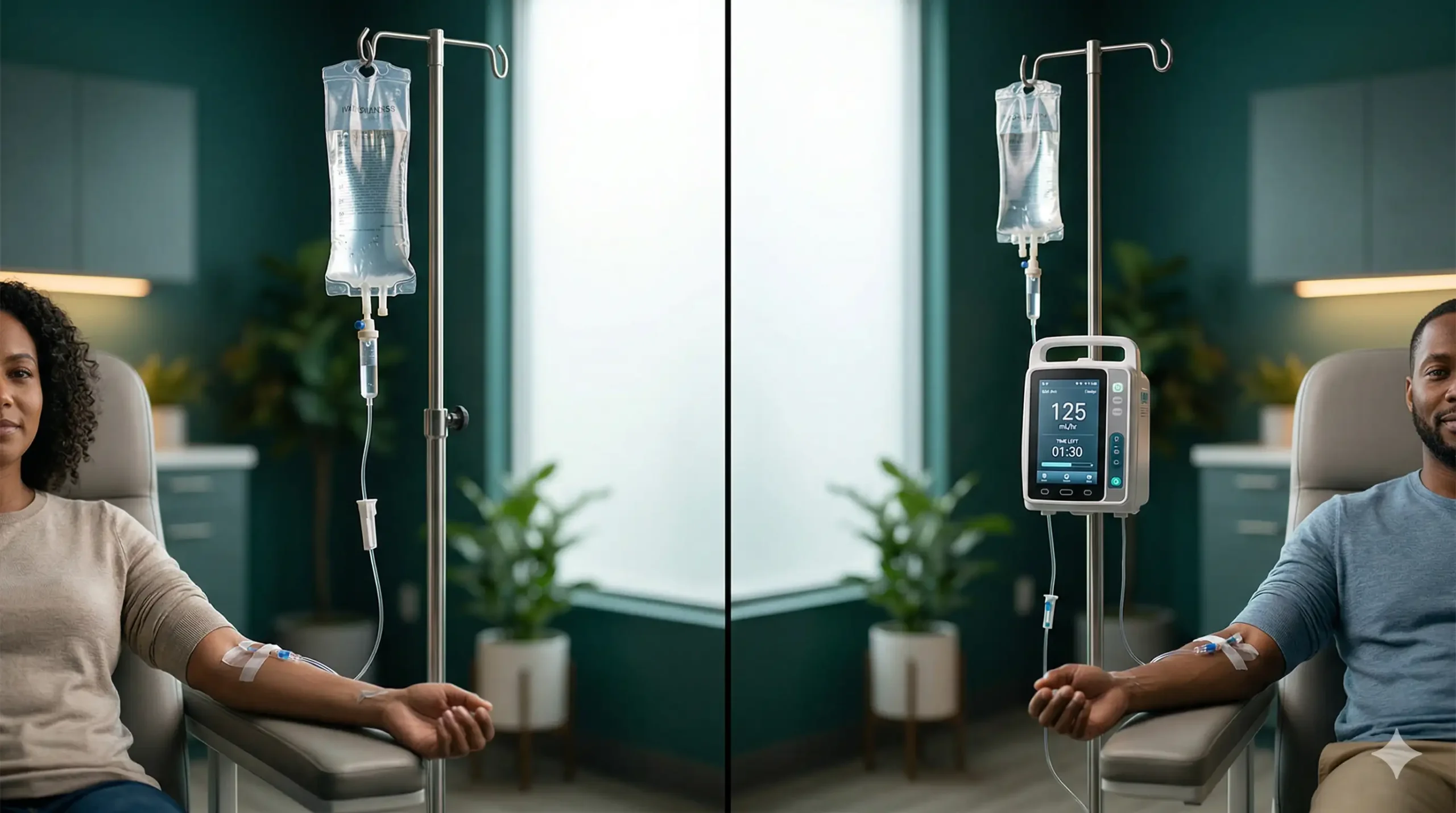
As interest in longevity and cellular health grows, NAD+ therapy has become one of the most sought-after regenerative treatments. For patients in Dubai exploring their options, the debate around Nad injection vs IV drip is central to choosing the right protocol. Both methods deliver this essential coenzyme directly into the body, but they differ in speed, absorption, duration, and overall experience. This guide breaks down everything you need to know.
Nicotinamide adenine dinucleotide, commonly known as NAD+, is a coenzyme found in every living cell. It plays a fundamental role in hundreds of metabolic processes, most notably in converting nutrients into cellular energy through the mitochondria. Without adequate NAD+ levels, cells cannot produce the energy required to function optimally, which affects everything from brain function and DNA repair to immune response and cardiovascular health.
NAD+ levels naturally decline with age, and this decline is increasingly recognized as a contributing factor in age-related diseases, cognitive deterioration, chronic fatigue, and metabolic dysfunction. Research published in peer-reviewed journals has demonstrated that supplementing NAD+ can help restore cellular function, support healthy aging, and improve overall vitality.
While oral NAD+ supplements exist, they face significant bioavailability challenges because the molecule is largely broken down during digestion. This is why direct delivery methods, specifically injections and IV drips, have gained traction among healthcare providers across Dubai and globally. These methods bypass the digestive system entirely, ensuring that a clinically meaningful dose reaches the cells where it is needed.
NAD+ injections deliver a concentrated dose of the coenzyme directly into muscle tissue through an intramuscular or subcutaneous injection. The procedure is quick, typically completed within five to fifteen minutes, and does not require the patient to remain connected to an IV line for an extended period.
The injection process is straightforward and involves minimal clinical setup. Key aspects include:
For patients across Dubai who value convenience, professional injection services at home Dubai make it possible to receive NAD+ injections without visiting a clinic. A licensed healthcare professional administers the injection, monitors for any immediate reactions, and ensures proper dosing.
NAD+ injections are particularly well-suited for individuals who need a time-efficient treatment option. They are commonly chosen by busy professionals, frequent travelers, and patients who prefer a quick procedure over a multi-hour infusion session. The Nad shot vs Nad IV debate often comes down to this practical consideration of time and convenience versus the sustained delivery that an IV provides.
NAD+ IV drips deliver the coenzyme directly into the bloodstream through an intravenous line over an extended period, typically ranging from one to four hours, depending on the dose. This gradual delivery method allows for higher total doses and gives the body more time to process and utilize the NAD+ without overwhelming cellular systems.
The IV drip process requires more clinical setup than an injection but offers distinct advantages in terms of dose control and bioavailability. Key aspects include:
For residents of Dubai who prefer receiving treatment at home, IV therapy at home Dubai services provide medically supervised NAD+ IV drips in the comfort and privacy of your own space. A licensed nurse manages the entire session from setup to completion.
The primary clinical advantage of IV delivery is bioavailability. Because the NAD+ enters the bloodstream directly and is delivered gradually, the body has sustained exposure to the coenzyme over the course of the session. This can be particularly beneficial for patients seeking higher therapeutic doses or those undergoing NAD+ therapy for specific clinical indications such as neurological support, addiction recovery, or chronic fatigue management.
Understanding the core differences between these two delivery methods is essential for making an informed decision. When evaluating and injection vs iv drip, the comparison spans several clinically relevant dimensions that affect both the experience and the outcome of treatment. The most practical distinctions can be summarized as follows:
of injections takes 5 to 15 minutes, while IV drips require 1 to 4 hours per session.
Injections typically deliver 50 to 200 mg, whereas IV drips can deliver 250 to 1,000 mg or more in a single session.
Both methods bypass the digestive system, but IV drips achieve near-complete bioavailability due to direct bloodstream delivery, while intramuscular injections are absorbed gradually through muscle tissue.
Injections are often administered more frequently due to lower per-session doses, while IV drips may be scheduled weekly or biweekly.
IV drips carry a slightly higher risk of infusion-related side effects such as nausea, flushing, or chest pressure, particularly at faster drip rates.
Injections are generally less expensive per session, though total treatment costs depend on frequency and dosage requirements.
Neither method is universally superior. The right choice depends on the patient’s health goals, available time, budget, and the clinical recommendation of their healthcare provider.
Regardless of the delivery method chosen, NAD+ therapy offers a range of clinically supported benefits that address both immediate wellness concerns and long-term health optimization. The nad+ injection benefits are broadly consistent with those of IV drip delivery, as the active molecule is the same.
The documented benefits of NAD+ supplementation at the cellular level are among the most significant. These include:
These cellular-level improvements form the foundation for the broader systemic benefits that patients experience.
Beyond cellular function, NAD+ therapy supports several body systems that directly impact daily quality of life:
These benefits apply to both injection and IV drip delivery, though the intensity and duration of effect may vary depending on the dose and method used.
The question of effectiveness often centers on how much NAD+ actually reaches the cells and how quickly it begins to work. Both injections and IV drips bypass oral bioavailability challenges, but they differ in their absorption profiles.
With an IV drip, NAD+ enters the bloodstream directly and is immediately available for cellular uptake. The gradual infusion rate allows the body to process the coenzyme steadily, which can result in more sustained cellular exposure over the course of the session. This makes IV drips particularly effective for patients who require higher doses or who are addressing chronic conditions.
With an intramuscular injection, NAD+ is deposited into muscle tissue and absorbed into the bloodstream over a period of minutes to hours. While the absorption is still significantly better than oral supplementation, the peak blood concentration is typically lower than what an IV drip achieves. However, for maintenance therapy and general wellness, this level of absorption is clinically adequate.
In clinical practice, many healthcare providers in Dubai recommend a combined approach, starting with a series of IV drips to establish a therapeutic baseline and then transitioning to injections for ongoing maintenance. This strategy offers several advantages:
This combined protocol is increasingly popular among patients across Dubai who want both clinical effectiveness and practical convenience.
Both NAD+ injections and IV drips are generally well tolerated when administered by qualified healthcare professionals. However, as with any medical treatment, there are potential side effects and safety considerations that patients should be aware of before beginning therapy.
The side effects associated with IV drip delivery are primarily related to the infusion rate and total dose. These include:
These side effects are manageable and rarely require discontinuation of treatment. The administering nurse can adjust the drip rate in real time to minimize discomfort.
The injection-specific side effects tend to be localized and milder in nature:
All NAD+ treatments should be administered by licensed healthcare professionals who can monitor for adverse reactions and adjust protocols accordingly. In Dubai, the Dubai Health Authority regulates all injectable and intravenous therapies, ensuring that providers meet strict safety and quality standards.
Selecting between an injection and an IV drip is not a one-size-fits-all decision. The optimal choice depends on a combination of clinical factors, personal preferences, and practical considerations that vary from patient to patient.
Your healthcare provider’s assessment should be the starting point for any decision. Key clinical factors include:
Beyond clinical considerations, practical factors play an equally important role:
For patients in Dubai, trusted home nursing Dubai services provide access to both NAD+ injections and IV drips administered by licensed professionals in the comfort of your home, making either option convenient and accessible.
NAD+ therapy is not limited to a specific age group or health condition. It is increasingly sought by a diverse range of patients across Dubai, from young professionals looking to optimize mental performance to older adults seeking to support healthy aging and cellular repair.
Individuals who may benefit most from NAD+ therapy include those experiencing chronic fatigue or low energy despite adequate sleep, patients with age-related cognitive decline or brain fog, athletes seeking faster recovery and improved mitochondrial function, individuals in addiction recovery programs, and anyone interested in proactive longevity and anti-aging strategies.
Before starting NAD+ therapy, a comprehensive health assessment is recommended. This typically includes blood work, a review of your medical history, and a consultation with a physician or qualified healthcare provider who can recommend the appropriate delivery method, dosage, and treatment schedule tailored to your individual needs.
Whether you are weighing the options of NAD injection vs. IV drip or you have already decided on your preferred method, Lana Life Care provides professional, medically supervised NAD+ therapy services delivered directly to your home in Dubai. Their team of licensed healthcare professionals ensures that every session is safe, comfortable, and tailored to your individual health goals.
From the initial consultation to ongoing treatment, Lana Life Care manages the entire process with clinical precision. Every NAD+ formulation is physician-prescribed, every session is administered by a licensed nurse, and vital signs are monitored throughout. For residents of Dubai seeking a trusted partner in their wellness journey, Lana Life Care offers the convenience of home-based care without compromising on clinical standards.
IV drips deliver higher doses with near-complete bioavailability, making them more effective for intensive therapeutic goals. However, for general wellness and maintenance, injections provide clinically adequate absorption and are a practical, time-efficient alternative.
NAD+ injections typically take five to fifteen minutes, while IV drips require one to four hours per session depending on the dose. The significant time difference makes injections preferable for patients with limited availability.
NAD+ injections are generally less expensive per session than IV drips due to simpler equipment and shorter administration time. However, total treatment cost depends on the prescribed frequency and dosage, which your healthcare provider in Dubai can outline during consultation.
Yes, many patients use a combined approach. A common protocol starts with IV drips to build a therapeutic baseline, then transitions to injections for ongoing maintenance. Your healthcare provider can adjust the protocol based on your response.
Most patients report mild discomfort similar to any intramuscular injection, such as a brief sting or pressure at the site. Some experience temporary soreness or redness afterward. The discomfort is generally well tolerated and resolves within minutes to hours.
Frequency depends on the delivery method and goals. IV drips are commonly scheduled weekly or biweekly, while injections may be given one to three times weekly during loading and weekly for maintenance. Your provider will tailor the schedule accordingly.

WhatsApp us