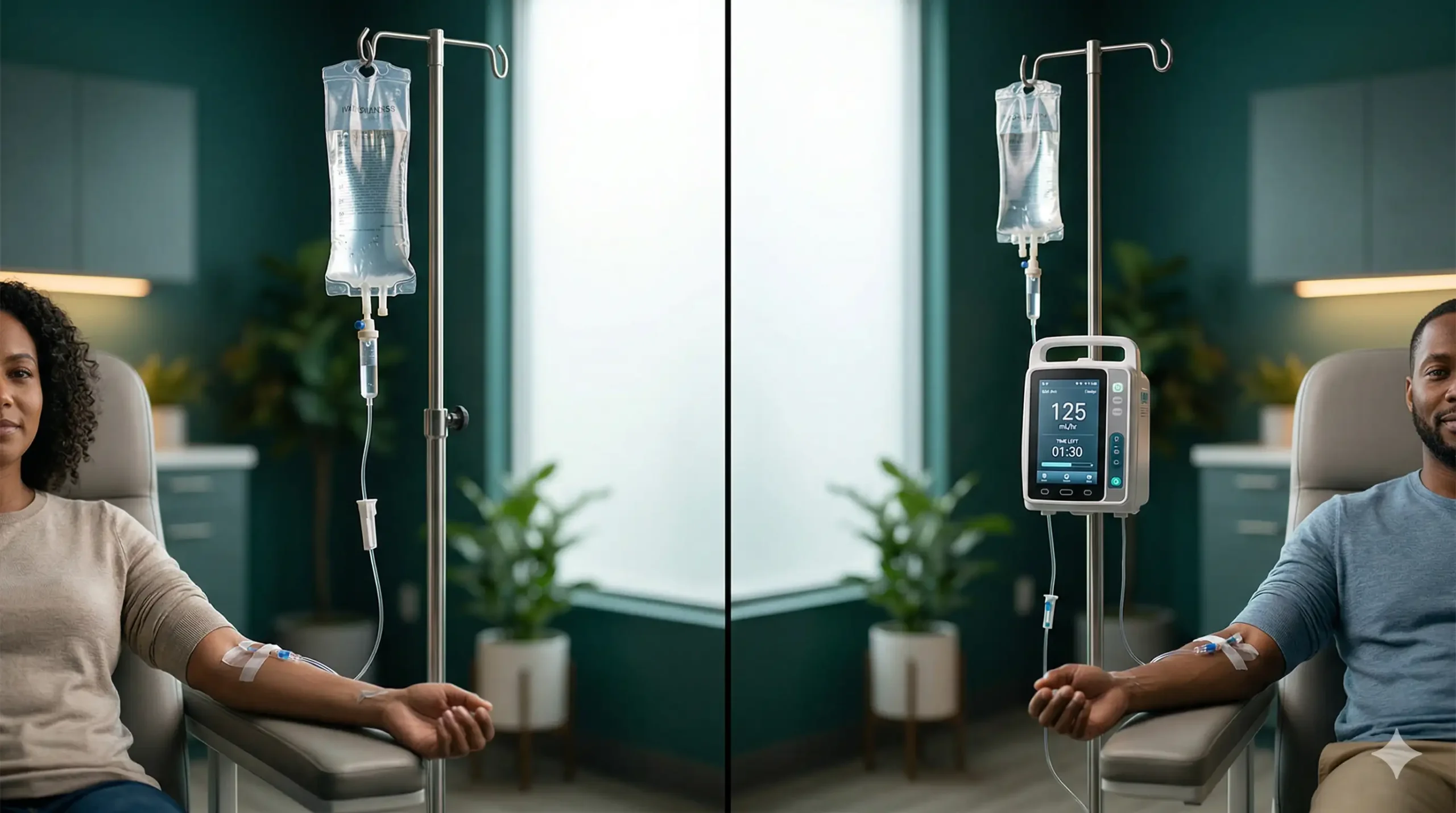
Intravenous therapy is one of the most efficient ways to deliver fluids, vitamins, and medications directly into the bloodstream. Yet many patients remain unsure about the real distinction between IV drip vs iv infusion and which method best suits their specific needs. For residents of Dubai seeking IV therapy, whether at a clinic or at home, understanding these differences helps ensure you receive the right treatment delivered safely and effectively.
An IV drip is a method of intravenous delivery that relies on gravity to move fluid from an elevated bag, through a length of tubing, and into the patient’s vein via a catheter. The term “drip” comes from the visible drops of fluid that fall inside a small chamber within the tubing, allowing the healthcare provider to visually monitor and manually adjust the flow rate.
The mechanics of an IV drip are straightforward but require clinical knowledge to manage correctly. The key components and process include:
The healthcare provider calculates the desired drip rate based on the total volume to be delivered and the prescribed time frame. For example, a 500 ml bag ordered over two hours requires a specific number of drops per minute, which the nurse sets using the roller clamp.
IV drips are used across a wide range of clinical and wellness scenarios. The most common applications include:
For patients in Dubai who prefer receiving treatment in the comfort of their own home, professional iv drip at home in Dubai services offer a convenient and medically supervised alternative to clinic visits.
An IV infusion is a broader clinical term that refers to any method of delivering fluids, medications, or nutrients directly into a patient’s bloodstream through a vein. While all IV drips are technically a form of IV infusion, not all IV infusions rely on the gravity-based drip method. This is the core distinction that matters when comparing iv drip vs iv infusion in a clinical context.
The primary difference lies in the delivery mechanism and the level of precision available. Key distinctions include:
In everyday healthcare language, many providers and patients use “drip” and “infusion” interchangeably. However, understanding the difference between iv drip and iv infusion becomes important when discussing specific treatment protocols, medication safety, or insurance documentation.
Beyond the standard gravity drip, IV infusions can be delivered through several specialized methods depending on the clinical need:
Each method serves a specific clinical purpose, and the choice between them is determined by the medication being administered, the required flow rate, and the patient’s overall condition.
Now that both methods have been defined individually, it is helpful to see the difference between iv drip and iv infusion laid out side by side. While the two terms overlap significantly, there are specific clinical and practical distinctions that matter when choosing or discussing your treatment.
The most fundamental difference lies in how each method controls the flow of fluid into the body. Key distinctions include:
For standard hydration and vitamin therapy, the precision of a gravity drip is more than adequate. Pump-controlled precision becomes essential only when administering medications with narrow safety margins.
Beyond the clinical mechanics, practical factors also distinguish iv drip vs iv infusion in real-world use. Important differences include:
Understanding these practical differences helps patients set appropriate expectations and have more informed conversations with their healthcare providers.
For most patients seeking IV therapy for hydration, vitamin supplementation, or general wellness, the practical difference between an IV drip and a pump-controlled IV infusion is minimal. Both deliver the prescribed solution into the bloodstream, and both achieve the same therapeutic goal. The decision is typically made by the healthcare provider based on clinical factors rather than patient preference.
In practice, the choice between a gravity drip and a pump-controlled infusion depends on several factors. The most important considerations include:
For residents of Dubai seeking IV therapy for wellness, hydration, or nutrient supplementation, a standard gravity IV drip administered by a licensed nurse is typically the appropriate and most cost-effective choice. The healthcare provider will determine if a pump-controlled infusion is clinically necessary based on the specific treatment.
There are specific clinical scenarios where a gravity drip is insufficient and an infusion pump is required. These situations include:
If your healthcare provider recommends pump-controlled infusion therapy, this typically indicates a clinical need for precision that should not be substituted with a standard gravity drip.
For patients across Dubai who prefer the comfort and convenience of receiving IV therapy at home, Lana Life Care offers a professional, medically supervised service that brings clinical-quality care directly to your door. Whether you need a standard hydration drip or a more complex nutrient infusion, their team of licensed healthcare professionals ensures safe and effective treatment.
Lana Life Care’s home IV therapy service is designed to match the standards of clinical care while eliminating the need for a clinic visit. The service includes:
This structured approach ensures that patients receive the same standard of care available in clinical settings. For those specifically seeking home nursing Dubai services, Lana Life Care provides a reliable option backed by qualified medical professionals.
The demand for home-based IV therapy has increased significantly in Dubai in recent years. Several factors drive this trend:
Whether you are comparing IV drip vs iv infusion options or simply looking for a trusted provider, Lana Life Care’s team can guide you toward the right treatment based on your individual needs and medical history.
Not exactly. An IV drip is a specific gravity-based method, whereas IV infusion is a broader term encompassing all intravenous delivery methods, including pumps and syringe drivers. In everyday use, however, the terms are often used interchangeably.
IV push is significantly faster. It delivers medication directly into the vein within seconds to minutes, while an IV drip administers fluid gradually over 30 minutes to several hours, depending on the prescribed volume and rate.
Your healthcare provider determines the appropriate method based on the medication, dosage precision required, and your clinical needs. For wellness and hydration therapy, a standard gravity drip is typically used and is suitable for most patients.
Most IV infusions take between 30 minutes and two hours. The duration depends on the type of fluid or medication, the total volume being delivered, and the prescribed flow rate set by the healthcare provider.
Neither method is inherently more effective. Both deliver substances directly into the bloodstream. The difference is in delivery precision. Infusion pumps offer greater accuracy for sensitive medications, but for hydration and vitamins, a gravity drip works equally well.
Yes. Licensed home healthcare providers in Dubai offer professional IV therapy services at home. Providers like Lana Life Care send qualified nurses to administer IV drips and infusions in the comfort of your home, with full medical oversight.
Lana Life Care offers hydration therapy, vitamin and nutrient infusions, immune support drips, post-illness recovery infusions, and other physician-prescribed IV treatments. All sessions are administered at home by licensed nurses across Dubai.
National Institutes of Health (NIH). “Infusion Therapy Standards of Practice.” https://pubmed.ncbi.nlm.nih.gov/34188003/



WhatsApp us