IV Therapy is regarded as the most popular and widely used treatment method in medical circles due to its advantages over oral treatments. There are several benefits, risks, and expectations associated with this method that both healthcare professionals and patients need to understand well.
Intravenous (IV) therapy refers to the administration of therapeutic fluids directly into a vein. This therapy facilitates the faster delivery of water, medication, blood, nutrients, or vitamin IV drips to the body by injecting them directly into the bloodstream using a cannula.
It is worth noting that the majority of doctors prefer to use IV therapy, given its main advantages: it is faster, more effective, and also convenient for all patients and all ages.

IV therapy is used in the following cases:
This fast-acting technique is used when ordering an IV drip at home through the following steps
Although IV therapy is generally safe, there are some potential risks and complications, such as:
But rest assured, ordering home health care in Dubai from licensed specialist healthcare providers like our team at Lana Life Care will spare you from any of these risks.
Intravenous vitamin therapy involves administering a high concentration of certain vitamins (or vitamins and minerals) directly into the bloodstream, rather than orally, ensuring complete absorption.
The most common intravenous vitamin treatments contain high doses of vitamins B and C, calcium, and magnesium. The doctor dilutes the vitamins with sterile water to create a suitable intravenous solution.
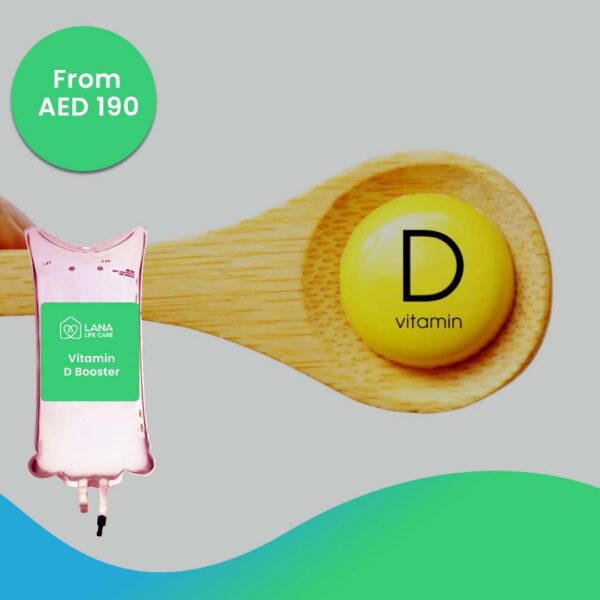
Vitamin IV drips can also be used to deliver high concentrations of vitamin D to those with severe vitamin D deficiency.
Furthermore, the doctor can customize the intravenous injection solution by mixing vitamins and minerals to meet each person’s health needs and goals.
The costs of intravenous therapy vary depending on the type of therapy and its components, and its value also varies according to the desired health goals and benefits. For instance, obtaining IV therapy for rehydration and energy improvement is less expensive than intravenous vitamin and mineral therapy for malnutrition, or NAD+ IV therapy, or blood transfusion, and so on.
Intravenous therapy can also be used to treat children and newborns for various purposes, including treating dehydration, restoring fluid balance, boosting immunity, treating malnutrition, and other therapeutic goals.
However, special care must be taken with the child, as follows:
Obtaining IV therapy requires expertise, skill, and a specialized healthcare provider to avoid any complications or risks during cannula insertion. Lana Life Care is the best home healthcare provider in Dubai, as we offer home IV drip Dubai with highly skilled and experienced nurses and healthcare providers licensed by the Dubai Health Authority to ensure providing the service quickly, accurately, and safely in the comfort of your home, anytime, around the clock.
You should call the nurse if you need to receive IBV therapy without risks.
When the drug dose is completely administered.
You can call Lana Life Care anytime; it is the nearest home health care provider for you to get professional IV therapy
All nurses must pass the ATI Skills Module 3.0 (IV Therapy and Peripheral Access)
IV therapy is more effective and faster than oral therapy.
The session cost may range from 100 to 800 USD